
The Ball Split at Medinah
The 2026 Presidents Cup kicks off Thursday at Medinah Country Club, and while Scottie Scheffler headlines the U.S. roster as the world’s top player, the real story sits inside the bags. There’s a unique equipment twist this year: a one-ball rule applies only to Foursomes, forcing partners to share a single model for alternating shots. This creates a weird dynamic where a player has to hit a ball that doesn’t match their own setup. According to GolfWRX, Titleist dominates the field with 13 of the 24 competitors choosing their Pro V1 or Pro V1x models. Both the International Team and the U.S. squad lean heavily on this brand, yet the mix gets messy once pairs form. Scheffler plays the standard Pro V1, while his partner might swing the firmer Pro V1x or even the specialized Double Dot version. Callaway follows with four players, while TaylorMade and Srixon each have three spots filled, leaving Chris Gotterup standing alone as the only Bridgestone user. That split matters because every ball flies differently. A Pro V1x Double Dot, used by Cameron Young, launches lower and spins less with long irons than the standard Pro V1x. When two partners hit the same ball, they must agree on how it feels off the tee and around the green. If one player needs high spin to stop a wedge and the other needs low spin for distance, the compromise could cost them points. (Remember, the Double Dot is a tour-only spec that’s not even available to the public.)
What the Top Players Carry
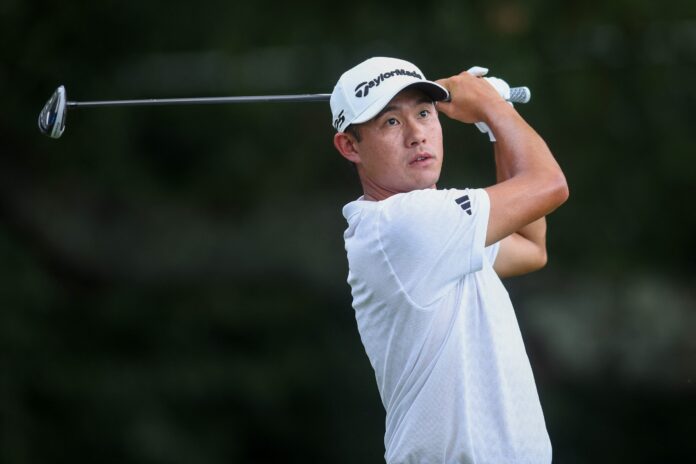
Looking deeper into the bags of the top qualifiers reveals specific gear choices that define their games. Si Woo Kim, the leading International qualifier, relies on a four-layer Callaway Chrome Tour. GolfWRX reports that this ball offers a softer feel with low long-game spin. His U.S. counterpart, Scottie Scheffler, sticks with the Titleist Pro V1, which is known as the brand’s softest option and flies lower than the X model. Collin Morikawa uses the TaylorMade TP5x, a five-layer ball built for maximum speed and reduced driver spin. This choice contrasts sharply with Sam Burns, who plays the Callaway Chrome Tour X for maximum short-game spin. The differences are subtle but critical when two players must trust the same flight path. A player used to a high launch might struggle when paired with someone whose ball flies flatter. The data shows a clear preference for urethane covers across the board. These balls provide the necessary grip on the clubface for precise wedge shots. Two-piece balls might go farther for the average golfer, but tour players need the control to stop the ball on fast greens. The variety of models on display proves that no single ball fits every swing style perfectly.
Strategy for the Sunday Singles
By the time Sunday Singles arrive, the pressure shifts from shared equipment to individual performance. Captains Brandt Snedeker and Geoff Ogilvy will likely pair players based on ball similarity to avoid early confusion. If a team mixes a high-spin ball with a low-spin ball, the Foursomes session could become a battle of adjustments rather than a display of skill. The U.S. team holds a numerical advantage with more players on the same brand, which might simplify their pairings. However, the International Team has strong options like Christiaan Bezuidenhout on the Pro V1. The outcome of the match may come down to who adapts fastest to a partner’s ball. With the first tee time set for Thursday morning, the captains have little time to test these pairings before the real pressure hits.