
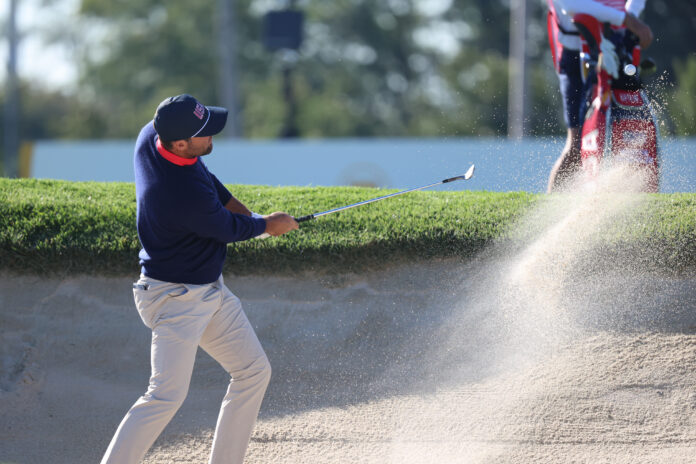
Most golfers panic when they see the sand. They shift their weight, try to hit too hard, and end up digging a hole instead of splashing the ball out. Dan Grieve, a coach ranked in the Golf Monthly Top 50, says this panic is the only real enemy. The solution isn’t a magical swing trick. It is a simple change to how you stand before you even take a backswing.
Widen Your Stance To Stop The Panic
Grieve claims that establishing a firm foundation is the sole method for managing the swing’s lowest point. He tells players to address the ball with a stance as wide as they would use for a driver. That means the feet are wider than the shoulders. This wider platform keeps the body stable and stops the weight from shifting wildly during the shot. If you try to move around too much, you cannot hit the sand in the right spot.
The setup also requires a specific angle for the feet. Grieve suggests flaring the trail foot out slightly while the front foot points out at 45 degrees. This position allows the lead knee to push over the foot, creating a diagonal downward pressure. The pelvis moves forward, and the shoulders might even reverse depending on the lie. As Grieve notes, “The setup is the most important part to bunker play.” This simple shift turns a chaotic mess into a controlled splash.
Hands Low And Wrist Cupping For The Strike
Once the feet are set, the hands must find their place. Grieve insists on keeping the hands low, almost between the knees. This low position forces a cup in the lead wrist, which helps the club hinge and release naturally. He also warns against a common mistake: gripping the club first and then twisting the face open. That method ruins the lie. Players must open the club face first, then take the grip. The shaft should line up with the back of the ball, not the center.
This specific setup allows the player to use the ground effectively. It creates a good platform to execute the swing without trying to lift the ball. The variable changes only if the bunker has very little sand. In that case, the player leans more into the shot to help the club dig. But for most lies, the wide stance and low hands are the key. Golf Monthly reports that this method helps dial in distance control from the sand just as much as it saves strokes.
Patience Beats The Quick Fix
Many amateurs want to fix their short game in one afternoon. They try new drills and change their grip all at once. That approach rarely works. Keith Simmonds, a master fitter at Callaway, reminds players that “Golf can be a fickle game.” A new setup takes time to feel right. Patience is required as you become familiar with the new equipment and the new stance. You will have good days and bad days while learning.
Prior to playing a round, dedicate time at the driving range to familiarize yourself with every section of the bag. Attempting to do everything simultaneously may seem appealing, yet such an approach results in confusion.